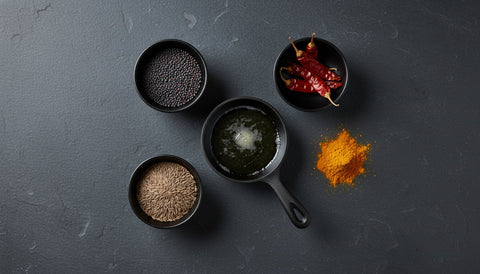
Indian spices are the foundation of a cuisine that uses many spices at once and carefully toasts them in fat. The most important include cumin, coriander, turmeric, cardamom, fenugreek, mustard seeds, cinnamon, cloves, and chili. Combined, they make masalas – spice blends such as garam masala.
If your curry at home tastes flat or only spicy, it is rarely due to the quantity, but usually to the order and technique. Here you will learn about the most important spices, the difference between garam masala and curry powder, and the tadka, with which Indian cooks bring aroma to the dish.
The 10 most important Indian spices
| Spice | Flavor | Typical use |
|---|---|---|
| Cumin | earthy, warm, slightly bitter | Tadka, dal, rice, curries |
| Coriander | citrusy, mild-sweet | Base of almost every curry blend |
| Turmeric | earthy, bitter, stains yellow | Dal, vegetable curries, rice |
| Green cardamom | floral, fresh, sweet | Biryani, chai, sweet dishes |
| Fenugreek | bitter-spicy, maple syrup | Curries, pickles, use sparingly |
| Mustard seeds | nutty when they pop in fat | Tadka, South Indian cuisine |
| Cinnamon | warm, sweet | Garam masala, rice, meat curries |
| Cloves | intense, warm | Garam masala, biryani |
| Chili | spicy, fruity depending on the variety | almost anywhere, quantity to taste |
| Ginger | fresh-spicy | Curries, marinades, chai |
Masalas: Garam Masala vs. Curry Powder
Garam masala ("warm spice blend") is the most important blend in North Indian cuisine. Typically includes cumin, coriander, cardamom, cinnamon, cloves, and pepper. There are almost as many varieties as there are cooks. Garam masala is used sparingly and usually added only towards the end of cooking so that its aroma is preserved.
Curry powder is a European invention based on the Indian model. It usually contains a lot of turmeric and coriander, tastes milder and rounder, and is cooked earlier in the cooking process. The two are not interchangeable: garam masala tastes significantly more intense and different than curry powder.
Our Blends for Indian Cuisine
- STAY Garam Masala – with coriander, cumin, cinnamon, cumin, cloves, cardamom, and ginger. For rounding off curries, dal, and meat dishes.
- Butter Chicken Spice – everything you need for the creamy tomato-butter curry, from tomato to cumin to cardamom.
- Golden Umami – a spicy all-rounder with fenugreek, asafoetida, and turmeric, ideal for dal, vegetable curries, and rice.
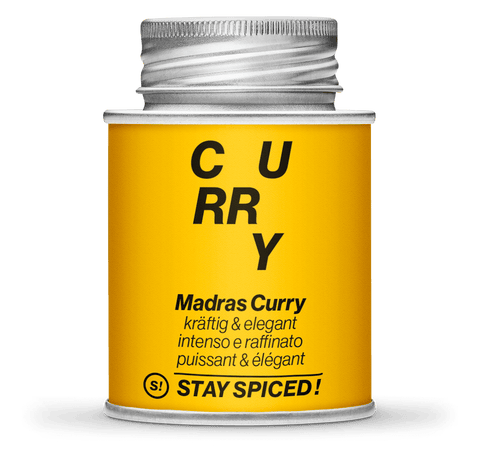
- STAY Madras Curry – bold and elegant for classic curries.
The Tadka: How to Bring Aroma to the Curry
Tadka (also called tarka or chaunk) means toasting whole spices in hot fat. Many aromatic compounds dissolve in fat and thus spread throughout the entire dish. Depending on the recipe, the tadka goes into the pot at the beginning or is poured over the finished dish at the end as a spicy fat, for example over dal.
- Heat ghee or oil in a small pan.
- Add mustard seeds and wait until they pop.
- Add cumin, dried chili to taste, and curry leaves, and toast for a few seconds until fragrant.
- Ground spices like turmeric at the very end, only briefly, otherwise they will become bitter.
- Immediately pour over the dish or add onions, garlic, and ginger and continue cooking.
Indian Spices in the Home Kitchen
Indian spices also suit dishes you already know: a pinch of garam masala in pumpkin soup, cumin with roasted carrots, turmeric and mustard seeds with potatoes. You can find recipe ideas in our recipe blog Curry & Asia, all blends in the Curry category.
Questions & Answers About Indian Spices
What Are the 5 Most Important Indian Spices for Beginners?
Cumin, coriander, turmeric, chili, and a good garam masala. With these, you can cook many curries and dals.
Why Doesn't My Curry Taste Like It Does in a Restaurant?
Usually, toasting the spices in fat and the correct order are missing. Toast whole spices first, ground spices briefly after, and garam masala only towards the end.
What Is the Difference Between Curry Powder and Garam Masala?
Curry powder is a mild, turmeric-based blend that is cooked with the dish. Garam masala is more intense, with cinnamon, cloves, and cardamom, and is usually added only at the end.
Can I Also Use Indian Spices in European Dishes?
Yes. Cumin suits vegetables and minced meat, garam masala suits pumpkin and lentils, cardamom suits baked goods.
How Long Do Indian Spices Last?
The best-before date is on the label and varies depending on the product. Whole spices like cumin or cardamom retain their aroma longer than ground spices, and everything lasts longer when well sealed.