

Homegrown at "Maiergut"
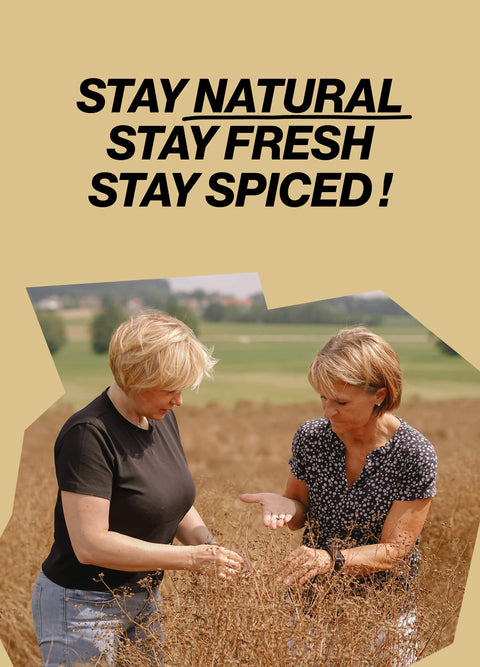
In 2021, the Maiergut estate in Upper Austria's Innviertel region was brought back to life.
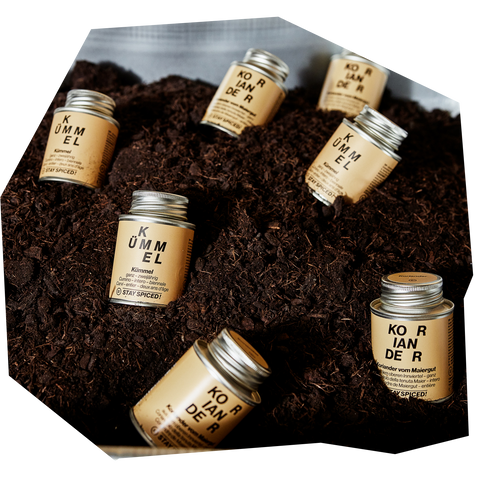
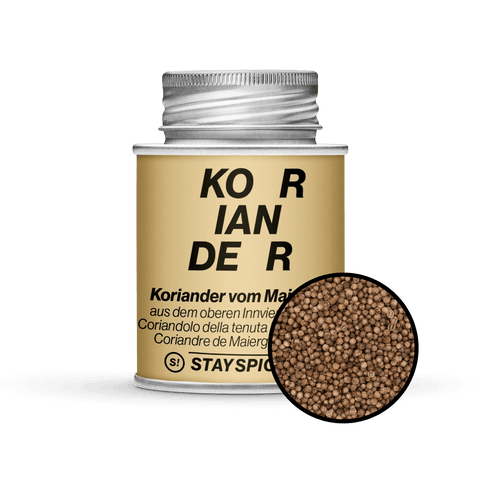
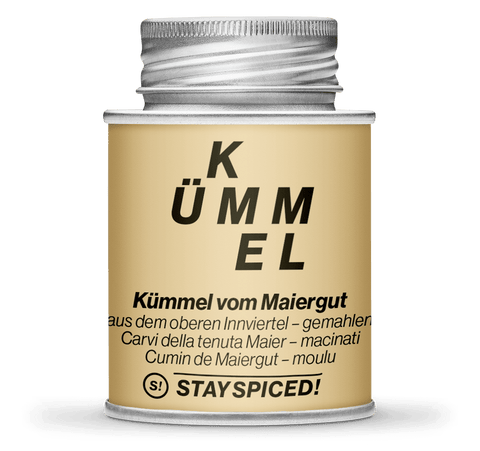
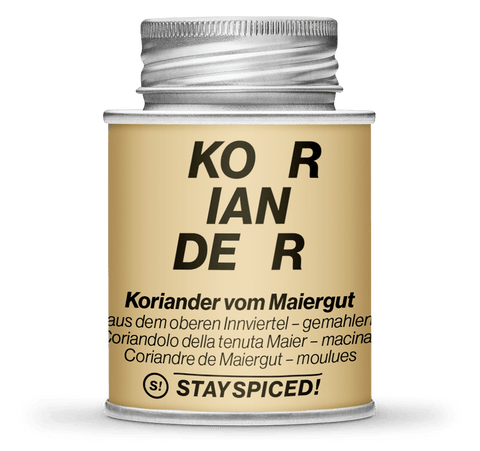
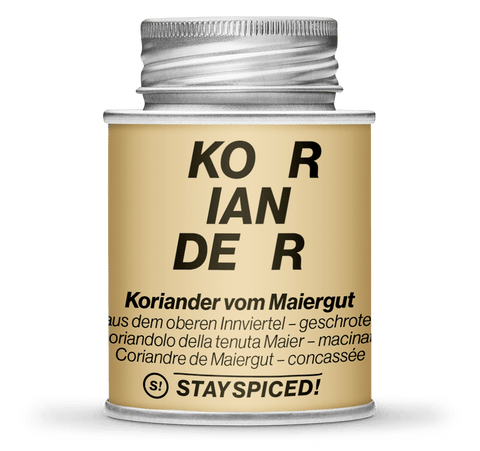
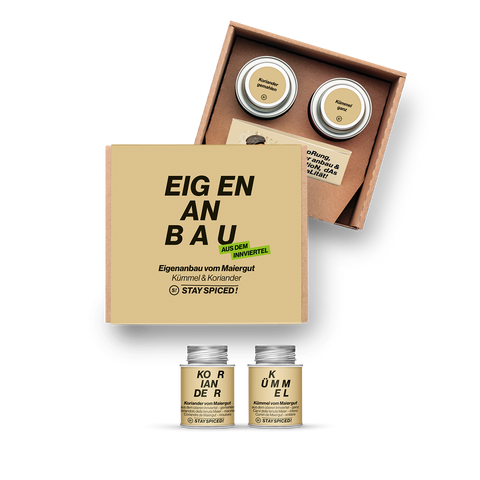
On the approximately 18-hectare estate, STAY SPICED ! has since been cultivating selected herbs, spices, and oilseeds. In addition to coriander and caraway, other herbs as well as oilseeds like linseed are gradually being grown here.
Our own cultivation enables short supply chains, transparent origins, and a conscious approach to soil and resources.
Here we proudly present the first STAY SPICED ! spices from our own cultivation – regional and sustainable.
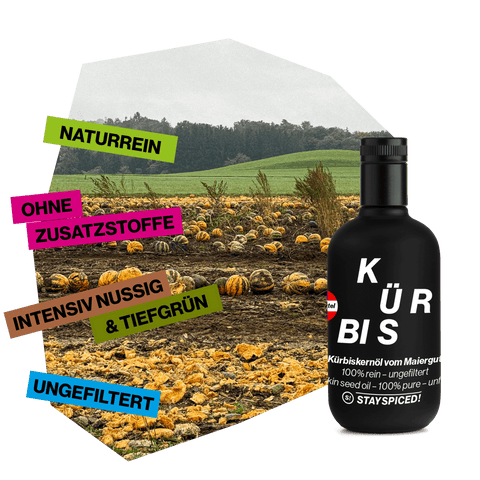
From field to bottle
Our pumpkin seed oil is produced by hand and with great care
- Cultivation: The pumpkins come from our own cultivation and grow on fertile Innviertel soil. In autumn, the golden-yellow fruits are deseeded directly in the field; the pulp remains as natural fertilizer.
- Drying: The seeds are cleaned with water and gently dried with warm air.
- Pressing: Before pressing, the seeds are cleaned again and processed into a pulp in a stone mill. This is mixed with water and salt and gently roasted while stirring – traditionally over a wood fire.
- Pressing process: The roasted pumpkin flour is pressed in layers while warm. The oil obtained rests for several days in canisters to develop flavor and clarity – completely without filtration or refining.
- Utilization: The remaining pumpkin cake is reused as high-quality animal feed – for resource-efficient production.
Approximately 2.5 kg of pumpkin seeds are needed for one liter of oil – the result is a pure natural product from 100% Innviertel agriculture.
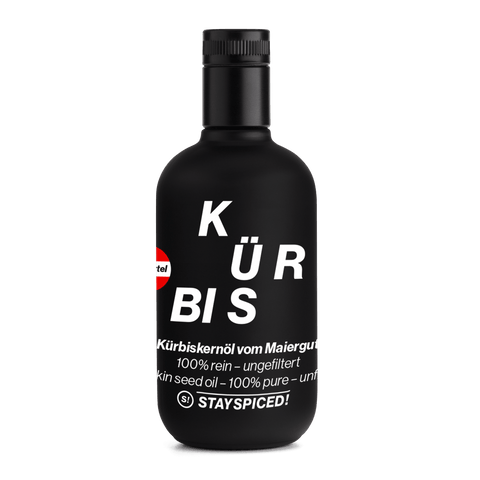

STAY SPICED! Pumpkin seed oil from Maiergut
- 100% Innviertel pumpkin seeds from our own cultivation
- Unfiltered, natural & without additives
- Intensely nutty & deep green – ideal for salads, soups & sweet dishes
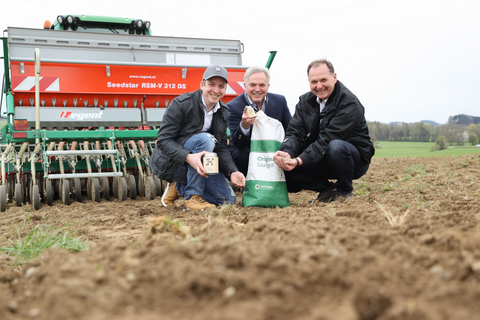
Cultivation following a well-planned crop rotation
Experts were brought on board for the professional care of the estate and crops. Support comes from Siegfried Zehetner of Saatbau Erntegut GmbH, based in Kefermarkt, who already had experience with cultivation areas and processing (drying, cleaning, and milling). The estate itself is managed by farmer Markus Harner. He is the neighbor of the Maiergut and is responsible for professional cultivation and harvesting.
Best quality from the region!
“With our own cultivation, we want to create awareness for regional spice cultivation of the highest quality and go one step further in terms of regionality.”
Lukas M. Walchhofer – CEO & Spice Expert at STAY SPICED !
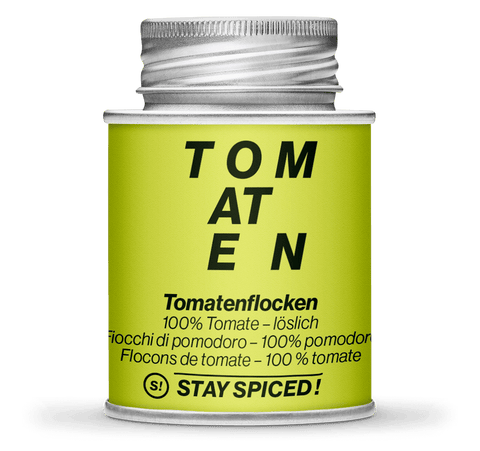
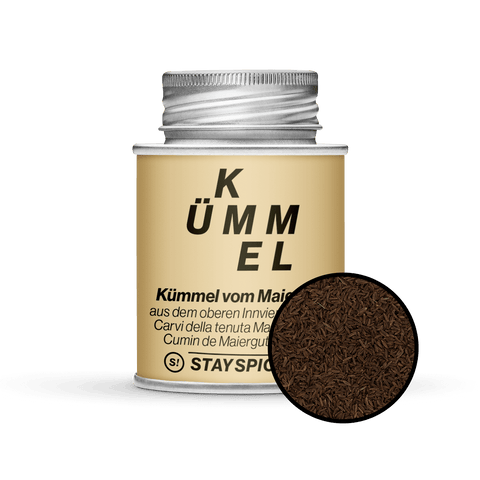
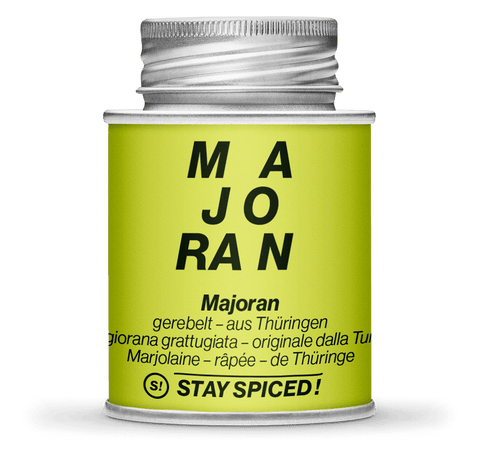
All the essential information at a glance
Coriander general
Coriander is a popular herb used in many cuisines worldwide. A distinction is made between coriander seeds and fresh coriander leaves.
Both come from the coriander plant but differ significantly in taste and use.
Coriander leaves are often also called cilantro and have a fresh, citrusy taste. They are used in many cuisines worldwide, particularly in Asian, Latin American, and Indian cooking, to season and flavor dishes. Coriander leaves are usually used fresh but can also be dried. They are suitable as a garnish for soups, curries, salads, and sandwiches.
Coriander seeds, on the other hand, have a warm, spicy taste and are typically used in Indian, Mexican, and North African cuisine. They are an important component of spice blends such as garam masala, curry powder, and harissa. Coriander seeds can also be used whole and are well-suited for pickling vegetables or seasoning meat and poultry.
How is coriander grown?
Coriander is an annual plant that can be grown in temperate climates. Cultivation requires a sunny location with well-drained soil and an appropriate pH value. Our fields combine all these characteristics, allowing us to offer our coriander the best conditions for healthy growth. Coriander can be grown from seeds or seedlings and can be harvested approximately 45 to 70 days after planting by cutting the leaves and stems or harvesting the seeds.
A yield of between 1200 and 2200 kilograms per hectare is expected. To further advance this project, we are constantly looking for potential cultivation areas.
How is cilantro used?
Coriander seeds have a slightly sweet, nutty note that you can enhance by briefly toasting them. The seeds are usually used ground or whole to add a fresh touch to dishes such as curries, soups, and stews. They also go wonderfully with fish, meat, and Christmas pastries like gingerbread and speculoos, as well as homemade bread. The seeds can also be used for pickling vegetables. In terms of taste, coriander seeds have nothing in common with fresh coriander leaves, which even convinces coriander skeptics.
Caraway in general
Caraway is a spice plant that belongs to the Apiaceae family and is botanically known as Carum carvi. The plant is native primarily to Europe, Asia, and North Africa and has been cultivated and used for thousands of years.
The plant has an upright stem that can grow up to 60 cm tall. The leaves are finely pinnate and the flowers are arranged in umbels. Caraway is mainly cultivated for its seeds, which are aromatic and spicy, and have a distinctive flavor.
How is caraway grown?
Caraway can be cultivated in various climates, but it prefers a temperate to continental climate with sufficient moisture and an average temperature between 10 and 25°C. In Austria, caraway cultivation is mainly widespread in the federal states of Styria, Carinthia, and Burgenland, and with our Maiergut caraway, now also in Upper Austria.
The climatic conditions in Austria are favorable for cultivation, as we have a temperate climate with sufficient rainfall. The soil conditions are also suitable, as caraway grows best in well-drained soils with a neutral pH value.
Maiergut caraway is particularly aromatic and of high quality.
Caraway is usually cultivated in rotation with other grains and field crops. Sowing takes place in spring or autumn, depending on the climate and region. The seeds are sown in rows with a distance of about 15 to 20 cm and incorporated into the soil at a depth of about 1 to 2 cm.
Caraway requires consistent watering to grow well. Weeds must be removed regularly to avoid hindering the plant's growth. The plants can grow up to 60 cm tall and typically produce flowers and seeds in the second year after sowing. Hence the name: biennial caraway.
Harvesting takes place when the seeds are ripe and have a brownish color. The seeds are either harvested by hand or with special harvesting machines. After harvesting, the seeds are dried and cleaned to remove dirt and impurities. They are then filled directly into the S! can.
How is caraway used?
Due to its strong inherent flavour, caraway can also season (fatty) meat dishes such as roast goose, pork, or lamb, goulash, and stews. Furthermore, it is excellent for seasoning sauces, soups, vegetables, cheese, and salads, as well as for bread, cakes, and pastries. No matter what you use it for, you'll find it with us in whole or ground form to best suit your dishes.
Pumpkin Seed Oil - General Information
Pumpkin seed oil is a traditional regional specialty in Austrian and Southern German cuisine. Its deep green color and characteristic taste complement both savory and sweet dishes. Particularly surprising: vanilla ice cream with a few drops of pumpkin seed oil and roasted pumpkin seeds.
How is pumpkin seed oil produced?
Our pumpkin seed oil is traditionally handcrafted from pumpkins grown in our own Innviertel cultivation. After harvesting, the seeds are extracted directly in the field, washed, and gently dried. They are then ground in a stone mill, mixed with water and salt, and gently roasted over a wood fire. The warm pumpkin seed meal is pressed, and the oil is left to rest for several days, developing its typical depth and clarity – completely without filtration or refining. The press residues are reused, creating a sustainable, closed cycle.
Around 2.5 kg of pumpkin seeds are processed for one liter of oil – a pure natural product from 100% Innviertel agriculture. 🌱🟢
How do I use pumpkin seed oil?
Pumpkin seed oil is used exclusively cold, as it is not heat-stable. It is ideal for refining salads, pumpkin soup, beef carpaccio, or as a topping on toasted bread. It also adds a delicate depth of flavor with its nutty character to vegetables, cheese, and dips.
What does pumpkin seed oil taste like?
The oil impresses with a strong, slightly sweet nutty note and a smooth consistency. It brings a warm, rounded depth to the plate, suitable for both savory classics and creative dessert ideas. Its characteristic dark green color is not only a visual highlight but also an expression of true quality.
