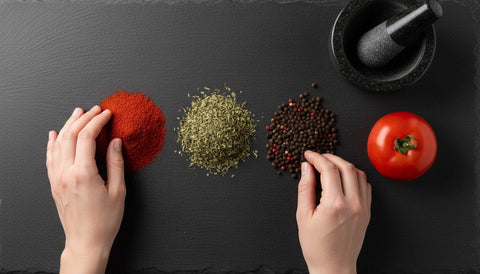
You can recognize high-quality spice blends by four things: carefully selected raw ingredients with plenty of aroma, a recipe in which the spices set the tone, the aroma and color when you open the jar, and packaging that keeps out light and air. Price alone tells you very little.
This guide is for food lovers who want to taste the difference when cooking. How to identify additives on the label is explained in our guide Identifying spice blends without additives. Here, we focus on what goes beyond the label: raw ingredients, freshness, recipe, and storage.
What makes a high-quality spice blend
1. The raw ingredients
A spice's flavor is largely contained in its essential oils. How much of this is present depends on the variety, growing region, time of harvest, and drying process. Good manufacturers carefully select their raw ingredients from the best growing regions and test every batch. Raw ingredient prices are constantly rising – cutting corners here means sacrificing flavor.
2. The recipe
In a good blend, the spices provide the flavor. Salt or sugar may be included if they round out the flavor or make the blend more versatile. Balance is key. We develop many of our blends with professional chefs such as Roland Trettl or Haya Molcho.
3. Freshness and grind
The finer a spice is ground, the faster its aroma dissipates. That is why large bulk packages that remain open for years are not a good idea. Coarsely crushed or whole ingredients in a blend retain their aroma longer.
4. The packaging
Light, air, heat, and moisture deplete the aroma. An opaque jar with a good seal protects the blend between uses. Our jars are made in Austria – find out more on the page Our screw-top jar.
The 3-second check at home
- Smell: Open the jar. A good blend will immediately release an intense, complex aroma.
- Look: Vibrant, natural colors indicate fresh ingredients. Faded, gray tones suggest that the spice is old or has been damaged by light.
- Rub: Rub a pinch between your fingers. If the aroma intensifies, there are still plenty of essential oils present.
Our recommendations to get started
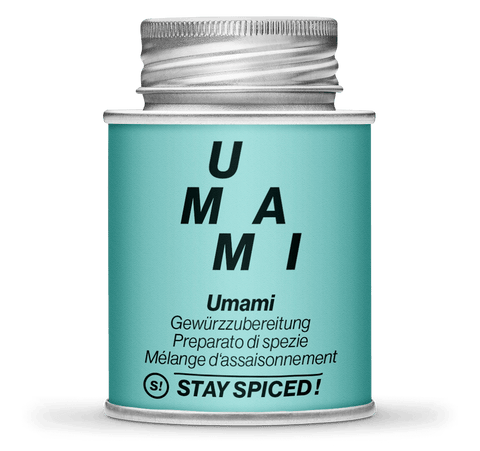
- STAY Umami – for sauces, soups, and vegetables with a savory depth.
- STAY Garam Masala – warm and aromatic for curries and dal.
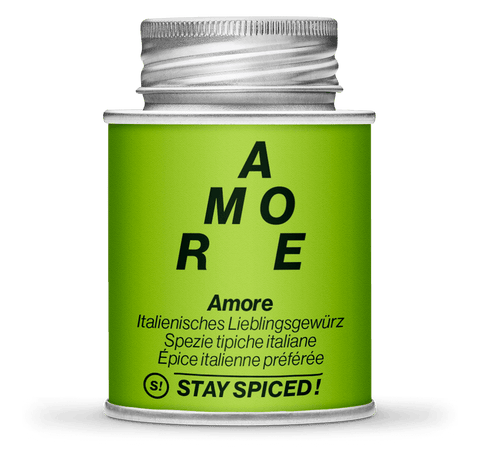
- Amore – for fish, chicken, and veal.
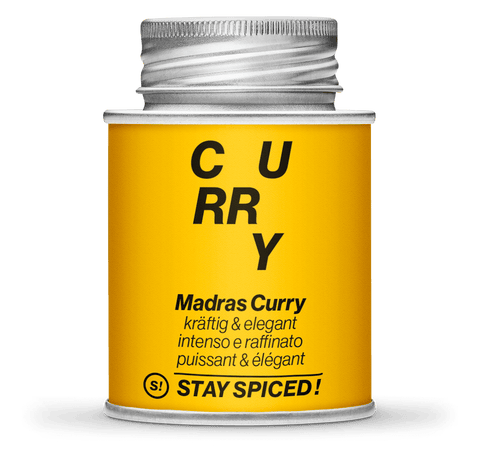
- STAY Madras Curry – bold and elegant.
- Butterbrot Gewürz – with Fleur de Sel, herbs, and flowers for bread.
You can find all our blends in the Spice Blends category. You can also try them in our Concept Stores.
How to keep your spice blends fresh
Store them in a dark, dry, cool, and airtight place, not above the stove. The best-before date is on the label and varies depending on the product. General rule: finely ground spices lose their aroma faster than whole spices, and keeping everything well sealed helps it last longer. Find out more in the guide Storing Spices Correctly.
Questions & Answers about high-quality spice blends
What are high-quality spice blends?
Blends made from carefully selected, aromatic raw ingredients with a balanced recipe in which the spices provide the flavor, and are well protected by packaging.
Why are spices from the manufactory more expensive than those in the supermarket?
Carefully selected raw ingredients, smaller batches, a lot of manual work, and elaborate packaging cost more. In return, you often need less spice for more flavor.
How long do spice blends last?
The best-before date is on the label and varies depending on the product. It is best to use ground blends promptly.
Do spice blends contain allergens?
Some blends contain allergens such as CELERY or MUSTARD. They are highlighted in the ingredients list on every product page.
Where is STAY SPICED ! made?
Our manufactory was founded in the heart of Salzburg and is now based in Moosdorf in the Innviertel – out of the city and into nature. A lot of manual work goes into our products there. Find out more in our Company History.
Which spice blend is right for meat, fish, or vegetables?
For fish and poultry, for example, Amore; for vegetables and sauces, Umami; for the grill, our Grill Spices. Find more ideas in the guides Seasoning Chicken and Seasoning Fish.