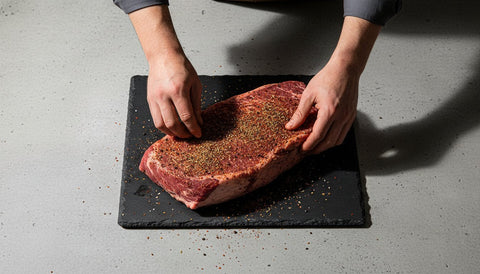
A BBQ rub is a dry spice blend that you rub into the meat before grilling. It adds flavor and creates a savory crust. Depending on the cut, leave it on for 30 minutes to overnight: shorter for steaks and poultry, longer for large roasts such as pork shoulder or brisket.
This guide covers practical tips for grilling: marinating times, quantities, techniques, and which rub is best for which cut. Find out what to look for when shopping if you want to avoid flavor enhancers in our Checklist for Glutamate-Free BBQ Rubs.
Rub or marinade?
A rub is dry and stays on the surface, where it combines with the meat juices to form a crust. A marinade is liquid, usually containing oil, acid, or yogurt, and is ideal for lean or small cuts that you grill quickly. For low & slow cooking, spareribs, pulled pork, or brisket, a rub is the first choice. You can also mix a rub with a little oil to make a paste – that's the middle ground.
How long should a rub marinate?
The salt in the rub first draws meat juices to the surface, dissolves in them, and is then slowly reabsorbed along with the spices. This is why a long marinating time in the refrigerator is worth it for large cuts. Our guidelines:
| Grilled food | Marinating time | Tip |
|---|---|---|
| Steaks, cutlets | 30 minutes to 2 hours | or season directly before grilling |
| Poultry (chicken, turkey) | 2 to 6 hours | not too long, otherwise the skin will become tough instead of crispy |
| Pork (shoulder for pulled pork, spareribs) | 4 to 12 hours | one night in the refrigerator is ideal |
| Beef (brisket, beef ribs) | 12 to 24 hours | large, dense cuts benefit the most |
| Fish, vegetables | just before grilling | season lightly, delicate flavors burn quickly |
Step by step: how to apply the rub correctly
- Pat dry: The rub will slide off wet meat.
- Use a binder (optional): A thin layer of mustard or oil helps the rub stick. You can hardly taste the mustard after grilling.
- Season evenly: Sprinkle the rub from a little height so it distributes better. One tablespoon per 500 g of meat is a good guideline.
- Press in, don't rub: Press lightly so that the spices do not clump.
- Refrigerate covered: Keep covered in the refrigerator during the marinating time. Wrapping is not necessary; a lid or foil is enough.
Why salt and sugar are important in the rub
Salt seasons deep into the meat and keeps it juicier. Sugar adds sweetness and creates the typical dark crust, but burns under intense direct heat. Rubs with a lot of sugar are therefore ideal for indirect grilling and smoking. If you are grilling over high heat, choose a rub with little or no sugar, or season the sugar component only later.
Which rub is best for what?
- Pork, pulled pork, spareribs: sweet and smoky, e.g. our Pulled Pork Barbecue Rub.
- Beef and steak: peppery and robust, e.g. Smoky Chili Steak Grill Seasoning or American Steak Grill & Barbecue Seasoning.
- Poultry: paprika, garlic, and herbs, e.g. Wiesen Hendl Roast Chicken Seasoning. Find out more in the guide Seasoning Chicken.
- For finishing: Steak Pepper N°66 over the sliced meat.
You can find the BBQ line from Grillmeister Tom Heinzle and all other rubs in our grilling seasonings, and matching recipes in the recipe blog Grilling & BBQ.
Frequently asked questions about BBQ rub
How long should a rub marinate?
Steaks 30 minutes to 2 hours, poultry 2 to 6 hours, pork 4 to 12 hours, and large beef cuts such as brisket 12 to 24 hours in the refrigerator.
How much rub should I use per kilo of meat?
As a guideline, about two tablespoons per kilo. If the rub contains a lot of salt, use slightly less.
Can I also use a BBQ rub as a marinade?
Yes. Mix the rub with oil and a little acid, such as lemon juice or vinegar, to make a marinade.
Why does my crust taste bitter?
Usually, the sugar or paprika burns under too intense direct heat. Finish grilling indirectly or choose a rub with less sugar.
Do I need to wrap the meat after rubbing it?
No. Keeping it covered in the refrigerator is enough. When smoking, large cuts of meat are often wrapped in paper or foil only later to keep them juicy.
What is the difference between a rub and seasoning salt?
Seasoning salt consists mainly of salt and is primarily used for seasoning. A rub contains more spices and often sugar, and is designed to create a crust when grilling.
How long does a BBQ rub last?
The best-before date is on the label and varies from product to product. Rule of thumb: finely ground spices lose their aroma faster than whole spices, and everything lasts longer if kept tightly sealed.