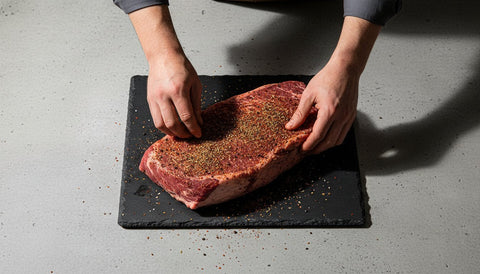
The perfect bark – crispy, deep red, caramelized, and full of flavor. It's every pitmaster's holy grail and what transforms a good piece of meat into an unforgettable BBQ experience. The secret behind it is often not a complicated maneuver, but a crucial tool: the BBQ rub. But what exactly makes a dry marinade so effective, how do you apply it correctly, and how do you recognize a blend that truly understands its craft? In this guide, we'll lead you step by step to the perfect "bark" and show you how to get the most out of your grilled food.
What is a BBQ Rub? The Dry Marinade for Professionals
A BBQ rub is far more than just a sprinkled spice mix. It's an architectural tool for flavor and texture. Imagine it as a dry marinade that is carefully applied to the meat before cooking to form an aromatic crust.
- Definition: A BBQ rub is a balanced mixture of salt, sugar, spices, and herbs that coats the grilled food and creates a flavorful crust, known as "bark," during the cooking process.
- The functional difference: While a liquid marinade primarily penetrates the meat with acid to tenderize it, a rub works on the surface. Through osmosis (more on that in a moment), it draws out moisture, creating the ideal basis for the Maillard reaction – the chemical process responsible for those delicious roasted aromas and the irresistible crust.
- The perfect balance: Every good rub is based on the balance of four pillars: salt (for flavor and moisture transfer), sugar (for caramelization), heat (like chili or pepper), and aromatics (like paprika, garlic, or herbs).
- Our focus at STAY SPICED!: We rely on pure, natural spices. Our goal is to emphasize and refine the meat's inherent flavor, not to overpower it. That's why you'll only find what's necessary for genuine taste in our blends.
Rub vs. Marinade: When to Use Which
The choice between rub and marinade depends on your goal. If you want to tenderize a tougher cut of meat, an acidic marinade (e.g., with vinegar, wine, or yogurt) is the right choice. It breaks down the protein structures in the meat, making it more tender. Its disadvantage: the moisture on the surface prevents a truly crispy crust from forming; the meat is more steamed than roasted.
A BBQ rub, on the other hand, is the specialist for texture. It is indispensable for "Low & Slow" smoker dishes like pulled pork or brisket, where a protective and flavorful crust is built up over hours. But it's also ideal for a quick steak or chicken from the grill to create maximum roasted aromas in a short time.
The Role of Salt and Sugar in Rubs
Salt and sugar are the two main actors in every rub. They are not only flavor carriers but also crucial technical players.
- Salt as the engine of osmosis: When salt meets meat, a process called osmosis begins. The salt first draws meat juices to the surface. This juice dissolves salt, sugar, and spices, forming a highly concentrated brine. This is then slowly reabsorbed by the meat – a process known as "dry brining." The result: the meat is not only seasoned on the surface but also deep within, and remains juicier.
- Sugar as the architect of the crust: Sugar is responsible for sweetness and, most importantly, for caramelization. Above a certain temperature (approx. 150–180 °C depending on the sugar type), it begins to melt and brown, giving the crust its typical dark color and slightly sweet notes. But be careful: at too high heat, sugar burns and becomes bitter. That's why sugar-rich rubs are perfect for cooking at low temperatures in the smoker, while you have to be careful with direct heat on the grill.
The Art of Rubbing: Step-by-Step to the Perfect Bark
The right technique is just as important as the rub itself. With a few simple steps, you ensure that the spices adhere optimally and can fully develop their effect.
- Preparation: The be-all and end-all is a dry surface. Carefully pat the meat dry all around with kitchen paper. The less moisture, the better the rub adheres and the faster a crust can form.
- The "Binder": For large cuts of meat like pork shoulder or brisket, a so-called binder can help. A wafer-thin layer of mustard, oil, or even water ensures that the rub sticks evenly to the meat. The flavor of the binder (e.g., mustard) almost completely evaporates during cooking.
- Dosage: The motto is "even rather than by the shovel." A thin, but continuous layer is ideal. It should cover the meat like a fine film, but not be so thick that it forms a muddy paste during cooking.
- Patience as an ingredient: Give the rub time to work. After you have rubbed the meat, let it rest in the refrigerator for several hours (or overnight). During this time, the dry-brining process can take place and the flavors can develop.
Instructions: How to Apply the Rub Correctly
- Step 1: Prepare the meat: Remove the meat from its packaging and pat it completely dry with kitchen paper.
- Step 2: Apply binder (optional): If you are using a binder, apply a very thin layer to all sides of the meat.
- Step 3: Sprinkle evenly: Sprinkle the rub from a height of about 20–30 cm onto the meat. This helps to achieve an even distribution, similar to salting in a professional kitchen. Don't forget the sides!
- Step 4: Lightly press: Gently press the spices with the palm of your hand. Avoid vigorous rubbing, as this can damage the meat fibers and distribute the spices unevenly.
Resting Times for Beef, Pork, and Poultry
The optimal resting time depends on the type and size of the meat cut:
- Beef (e.g., Brisket, Ribs): Large, dense cuts benefit from a long resting time. 12 to 24 hours in the refrigerator are ideal for the spices to penetrate deeply.
- Pork (e.g., Pork shoulder for Pulled Pork, Spareribs): Here, 4 to 12 hours are often sufficient. A night in the refrigerator is perfect, but even a few hours will yield great results.
- Poultry (e.g., Chicken, Turkey): For poultry, the resting time should be shorter, especially if the skin is to become crispy. 2 to 6 hours are usually sufficient. Too long a rest can dry out the skin and make it tough.

The Anatomy of a Premium Rub: Why Quality Matters on the Grill
A BBQ rub is only as good as its ingredients. The quality of the individual components has a direct impact on the final result – on the taste, the texture of the crust, and the entire grilling experience.
- The Value of Naturalness: High-quality rubs do not require anti-caking agents or release agents. If a spice mixture clumps slightly, that's often a good sign – it shows that it's free of unnecessary chemicals and consists of pure, natural ingredients that have retained their moisture.
- Essential Oils as Flavor Boosters: The difference between freshly ground spices and long-stored goods is enormous. Fresh spices contain a high proportion of essential oils, which provide an intense and complex aroma. They are the heart of every good blend.
- High-Quality Raw Materials: The choice of salt and sugar plays a major role. A natural volcanic salt brings a different minerality than refined table salt. Unrefined raw cane sugar caramelizes differently and delivers more complex flavors than white household sugar. These details influence the Maillard reaction and thus the quality of the crust.
- Expertise from Professionals: The best rubs are often created in collaboration with real grilling professionals. At STAY SPICED!, we develop our blends together with greats like World Grill Champion Tom Heinzle. This ensures that every blend not only sounds good but also works perfectly on the grill.
Our Philosophy: Pure Taste Needs No Enhancers
At STAY SPICED!, we are convinced: genuine, honest taste comes from first-class ingredients, not from a laboratory. That's why we consistently do without flavor enhancers like glutamate, artificial flavors, or colorings. Our philosophy of purity is our top priority. A good rub should set the stage for high-quality meat, not claim the leading role for itself. If you want to learn more about what to look for when choosing, take a look at our checklist for BBQ rubs without glutamate.
Sensory Experience on the Grill: The Interplay of Aromas
A good rub creates a multifaceted taste experience. Smoky notes should come from real smoked paprika or chipotle chilies, not artificial smoke flavor. The art lies in combining the individual components in such a way that they complement each other and create a harmonious overall picture on the palate.
Pro Tip: Think outside the box! A BBQ rub is not just for meat. A pinch on roasted potatoes, in a homemade tomato sauce, or on grilled vegetables can work wonders and create an unexpected depth of flavor.
Which BBQ Rub Suits Your Project?
Not every rub suits every meat. The art lies in choosing the right blend for your grilled food to optimally support its character.
- Pork (Pulled Pork, Ribs, Belly): Here, sweet-smoky profiles are the classic. Blends with a high proportion of paprika, brown sugar, and a hint of spice harmonize perfectly with the fatty meat and ensure a deep red, sticky glaze.
- Beef (Brisket, Steak, Short Ribs): Beef has a strong inherent flavor that needs a strong partner. Pepper-heavy, robust rubs with notes of coffee, garlic, and onions are ideal here. The famous "Dalmatian Rub" even consists only of salt and coarse black pepper.
- Poultry & Fish: Tender meat calls for finer aromas. Rubs with herbs, citrus notes (e.g., lemon peel), and milder spices like coriander or turmeric are excellent here. Heavy smoky aromas would quickly overpower the delicate taste.
- Wildcard Applications: Be creative! A savory rub can also be the highlight on a grilled corn on the cob, in the butter for garlic bread, or as a finish on the bun for your pulled pork burger.
Our Recommendations for Your Next BBQ
- For Spare Ribs: Choose a blend with a balanced ratio of sweet paprika and raw cane sugar. This ensures the perfect, slightly sticky glaze that forms during cooking.
- For Steak Lovers: A minimalist rub with coarse sea salt and various types of pepper (like Tellicherry or Cubeb pepper) best highlights the pure meat flavor.
- For the Experimenter: Also try rubs on vegetarian alternatives. Grilled cheese, tofu, or large zucchini slices get a whole new dimension with a savory crust.
STAY SPICED! – Craftsmanship from Salzburg
Behind each of our tins lies pure passion for taste. We believe in the power of good ingredients and the care of genuine craftsmanship.
- Hand-filled in Salzburg: Every single tin is hand-filled, sealed, and labeled in our manufactory in the heart of Salzburg.
- Focus on Sustainability: Our recyclable tinplate cans are not only an eye-catcher but also the best protection for the valuable aromas. They keep out light and moisture and preserve the quality of the spices.
- Your Next Step: Are you ready to give your grilled food the bark it deserves? Discover our Premium BBQ Rubs in the online shop now!
Frequently Asked Questions (FAQs)
How long does a BBQ rub last?
Since a BBQ rub consists of dry ingredients, it has a very long shelf life when stored correctly. Keep it in an airtight container in a cool, dark, and dry place. This way, it will retain its aroma for at least 12 to 24 months. Over time, it will lose intensity, but it will not spoil.
Can I also use a BBQ rub as a marinade?
Yes, that is possible. You can mix a rub with oil, vinegar, or fruit juice to create a liquid marinade or a seasoning paste. However, keep in mind that this changes its function: it will tenderize the meat rather than forming a dry, crispy crust. For the classic "bark," dry application is the best method.
Why does the sugar in my rub burn?
Sugar caramelizes at temperatures around 150–180 °C. If you grill at very high direct heat (e.g., searing a steak), the temperature can quickly exceed this mark. The sugar burns, turns black, and tastes bitter. Tip: Use sugar-rich rubs for indirect grilling and low & slow. At high heat, apply the rub only towards the end of the cooking time or choose a lower-sugar blend.
Do I need to wrap the meat after rubbing?
No, this is not strictly necessary, but it is a popular technique in BBQ. Wrapping in aluminum foil or butcher paper (the so-called "Texas Crutch") is often used for long cooks like pulled pork or brisket to shorten the cooking time and protect the meat from drying out. The disadvantage: the crust becomes softer due to the steam in the packet. Many pitmasters therefore unwrap the meat towards the end of the cooking time to firm up the crust on the grill.
What is the difference between a rub and seasoned salt?
Seasoned salt is primarily salt that has been flavored with herbs or spices. The salt content is dominant here. A BBQ rub is a more complex and balanced composition. While salt is an important component, it is balanced with sugar, heat, and a variety of aromatic spices. A rub is specifically designed to form a crust and create a multi-layered flavor profile, while seasoned salt is primarily used for salting and light seasoning.